Few works of political literature have achieved the lasting influence of George Orwell’s Animal Farm. Published in 1945, the novel remains one of the most widely discussed examinations of authority, propaganda, corruption, and the dangers of unquestioning loyalty. Generations of readers continue returning to Orwell’s classic and books similar to Animal Farm because its observations remain relevant long after the historical events that inspired it.
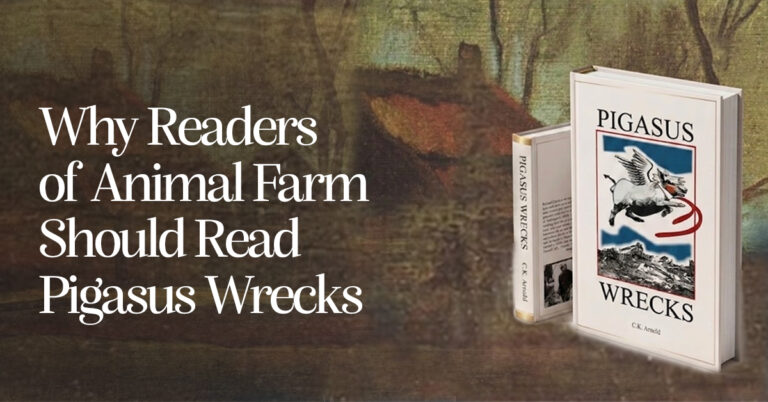
Literature exploring similar concerns continues to appear in fresh and imaginative forms. One notable example is Pigasus Wrecks by Roland Caissie, a collection of satirical and allegorical poems that examines political division, public devotion, misinformation, and cultural decline. Although the book differs significantly in structure from Orwell’s famous novella, both works encourage readers to question authority, examine collective behavior, and recognize how power can reshape public perception.
Readers who appreciate literature that challenges assumptions and encourages reflection will find Pigasus Wrecks an engaging companion to Animal Farm. The collection expands upon many themes that made Orwell’s work influential, presenting them in contemporary poetry filled with symbolism, satire, and cultural observation.
Why Animal Farm Continues to Matter
One reason Animal Farm remains widely read is its ability to transform complicated political ideas into an accessible narrative. Orwell used farm animals to represent political figures, movements, and systems of government. This approach allowed readers to understand complex realities without requiring extensive historical knowledge.
The novel demonstrates how revolutionary ideals can be corrupted when authority is concentrated in the hands of a few. Propaganda, manipulation, censorship, and the gradual erosion of accountability shape the story from beginning to end. Readers witness language being altered to support those in power and public memory being reshaped to serve specific agendas.
These themes remain relevant because they extend far beyond a single historical moment. Every generation encounters challenges involving leadership, misinformation, and public influence. As a result, many readers search for books similar to Animal Farm that explore these concerns from a modern perspective.
How Pigasus Wrecks Explores Similar Concerns
Animal Farm presents its ideas through a narrative structure, whereas Pigasus Wrecks approaches social criticism through poetry. Roland Caissie combines satire, symbolism, mythology, and cultural observation to create a collection that examines many of the same concerns Orwell addressed decades earlier.
The poems focus on the relationship between leaders and followers, questioning why people continue supporting individuals and movements despite repeated evidence of dishonesty or failure. Public devotion, tribal thinking, and ideological certainty become recurring subjects across the collection.
Instead of focusing on a single storyline, the poems create a series of symbolic scenes exposing contradictions within modern political culture. Grotesque figures, distorted landscapes, and recurring metaphors reveal the dangers of unchecked authority and public complacency.
This structure gives the collection a distinctive voice. Readers are encouraged to interpret meaning, connect ideas, and reflect on broader cultural patterns instead of simply following a linear plot.
Books Similar to Animal Farm for Contemporary Readers
Readers searching for books similar to Animal Farm are often looking for literature that challenges conventional thinking and encourages deeper analysis of society. Stories involving animals or farms are not necessarily the goal. Most readers are interested in works that explore how authority operates and how public perception can be influenced.
Pigasus Wrecks belongs comfortably within this literary tradition because it examines leadership and influence through symbolism instead of direct political commentary. Difficult questions about loyalty, truth, and accountability appear throughout the collection without relying on simplistic conclusions.
Like Orwell’s novel, the book encourages readers to consider how narratives are created and maintained. It explores the ways people become attached to belief systems even when evidence challenges those beliefs. This examination of collective thinking gives the collection significance that extends well beyond specific political events.
The Importance of Symbolism
Both Animal Farm and Pigasus Wrecks rely heavily on symbolism. Symbolic writing allows authors to discuss controversial or complicated subjects in ways that remain engaging and open to interpretation.
In Orwell’s novel, animals represent political figures and social classes. In Roland Caissie’s collection, symbolic creatures and exaggerated imagery expose the absurdities of modern public life. The title itself transforms the mythical Pegasus into “Pigasus,” creating a figure that embodies vanity, excess, spectacle, and distorted ideals.
This symbolic framework gives readers room to form their own conclusions. Literature becomes more engaging when readers actively participate in the meaning-making process rather than receiving fixed interpretations.
Multiple layers of symbolism also encourage rereading. New insights often emerge with each visit to the text, contributing significantly to the continued appeal of both works.
Political Allegory Books and Their Lasting Influence
Many readers are drawn to political allegory books because allegory transforms abstract ideas into vivid narratives and resonant images. Instead of presenting political theories directly, allegorical works illustrate how authority affects individuals, communities, and institutions.
Allegory encourages readers to focus on patterns instead of personalities. Corruption, ambition, manipulation, conformity, and greed become easier to recognize when presented through symbolic storytelling. Historical context may change, but these recurring behaviors continue appearing across generations.
Pigasus Wrecks follows this literary tradition by presenting contemporary concerns through poetic allegory. The collection demonstrates how symbolism can reveal truths that conventional commentary sometimes struggles to communicate.
This ability to connect current events with broader historical patterns helps explain why allegorical literature remains influential.
Public Belief and Collective Thinking
A fascinating aspect of Pigasus Wrecks involves its examination of collective thinking. The poems repeatedly ask why people remain devoted to leaders, movements, or ideologies despite evidence that challenges those beliefs.
Questions surrounding loyalty and identity sit at the center of many modern debates. Roland Caissie examines how fear, resentment, group loyalty, and social belonging influence perception. The collection suggests that individuals often prioritize belonging over independent judgment, creating conditions where misinformation and manipulation can flourish.
A similar concern appears in Animal Farm. The animals gradually accept distorted versions of reality because questioning authority becomes increasingly difficult. Language changes. Expectations shift. Public memory adapts to serve those in control.
Both works demonstrate how belief systems influence perception and shape behavior, even when contradictions become increasingly obvious.
Books About Politics and Power That Encourage Reflection
Many books about politics and power focus on historical events, public figures, or policy discussions. Although such works provide valuable information, literature often reaches readers differently by appealing to imagination and interpretation.
Pigasus Wrecks encourages readers to think beyond headlines and public narratives. The poems explore psychological and cultural forces shaping collective behavior, including fear, loyalty, resentment, and the desire for belonging.
Attention is directed toward deeper motivations rather than surface-level conflicts. Political systems do not operate independently from the people who support them. Personal choices, cultural values, and collective attitudes all contribute to the way authority functions.
This broader perspective gives the collection substantial depth and encourages meaningful reflection about society.
Satire as a Tool for Cultural Critique
Satire remains one of literature’s most effective tools for exposing contradictions. Instead of delivering direct lectures, satirical writing reveals flaws through irony, exaggeration, and wit.
In Pigasus Wrecks, satire serves both as entertainment and as critique. Striking imagery and sharp observations encourage readers to question public behavior and cultural assumptions.
Humor occasionally contributes to this process, but the collection reaches far beyond amusement. Beneath the irony lies a serious examination of manipulation, division, and the consequences of abandoning critical thought.
This balance between creativity and criticism helps distinguish the collection from conventional political commentary. Readers are invited to participate in the critique rather than observe it.
Roland Caissie’s Literary Approach
One reason Pigasus Wrecks stands apart from many contemporary works is Roland Caissie’s literary approach. The collection combines lyrical language with social observation, creating poems that are both imaginative and intellectually engaging.
Some pieces rely heavily on irony and satire poetry. Others adopt a more reflective tone, examining mortality, uncertainty, and cultural change. This variation creates a reading experience that remains fresh across the collection.
Imagery plays a particularly important role. Symbolic characters, surreal environments, and inventive metaphors encourage interpretation rather than passive reading. Ideas emerge naturally from the poetry instead of being presented as direct arguments.
This technique allows serious subjects to be explored without becoming overly academic or rigid. Readers encounter concepts through artistic expression, creating a richer literary experience.
Why Pigasus Wrecks Feels Relevant Today
Modern society faces many of the concerns explored in both Animal Farm and Pigasus Wrecks. Public trust continues to fluctuate. Information spreads rapidly; however, understanding often struggles to keep pace. Political identities increasingly influence social relationships and cultural discussions.
Against this backdrop, literature encouraging independent thought remains valuable. Roland Caissie’s collection invites readers to step back from daily controversies and examine broader patterns of behavior.
The poems explore how narratives develop, how loyalty forms, and how public perception can be influenced. These observations remain significant because they address recurring aspects of human nature rather than temporary political events.
Many readers will recognize contemporary concerns within the collection, even when specific references are symbolic or indirect.
Why Animal Farm Readers Should Add Pigasus Wrecks to Their Reading List
Readers who admire Animal Farm often appreciate literature combining symbolism with social critique. Such readers value books that challenge assumptions and explore the complexities of authority and public influence.
Pigasus Wrecks offers exactly that type of experience. The collection shares Orwell’s interest in power, manipulation, and collective thinking while approaching these subjects through poetry and contemporary cultural observation.
Instead of repeating familiar ideas, Roland Caissie expands upon them in original ways. The poems encourage readers to reflect on modern society and consider how historical patterns continue appearing in new forms.
Anyone interested in symbolic literature, satire, or cultural criticism will likely find the collection rewarding. Its themes remain relevant, its imagery invites interpretation, and its observations encourage deeper consideration of the forces shaping public life.
Literature as a Mirror of Society
Great literature often functions as a mirror, reflecting both strengths and weaknesses within society. Orwell achieved this in Animal Farm by exposing how power can distort ideals and transform public institutions.
Roland Caissie pursues a similar goal in Pigasus Wrecks. The collection examines the relationship between authority and belief, exploring how people respond to influence, propaganda, and social pressure.
Neither work offers simple answers. Instead, readers are encouraged to confront uncomfortable questions about responsibility, loyalty, and truth. This willingness to challenge assumptions is one reason both books remain thought-provoking.
Literature capable of encouraging reflection often remains relevant long after specific political moments have passed. Ideas concerning power, influence, and collective behavior continue resurfacing because they are deeply connected to human nature itself.
Conclusion
George Orwell’s Animal Farm remains one of the most influential works of political literature because it exposes how authority can manipulate truth and reshape public understanding. Its lessons continue resonating because they address recurring aspects of human behavior rather than temporary events.
Pigasus Wrecks by Roland Caissie builds on many of these concerns and places them in a contemporary context. Using poetry, satire, allegory, and symbolism, the collection examines belief, loyalty, influence, and cultural division with intelligence and creativity.
Readers searching for literature that challenges assumptions and encourages reflection will find Pigasus Wrecks a worthy companion to Orwell’s classic. Although the two works differ in form, both demonstrate how literature can illuminate patterns that continue shaping society.